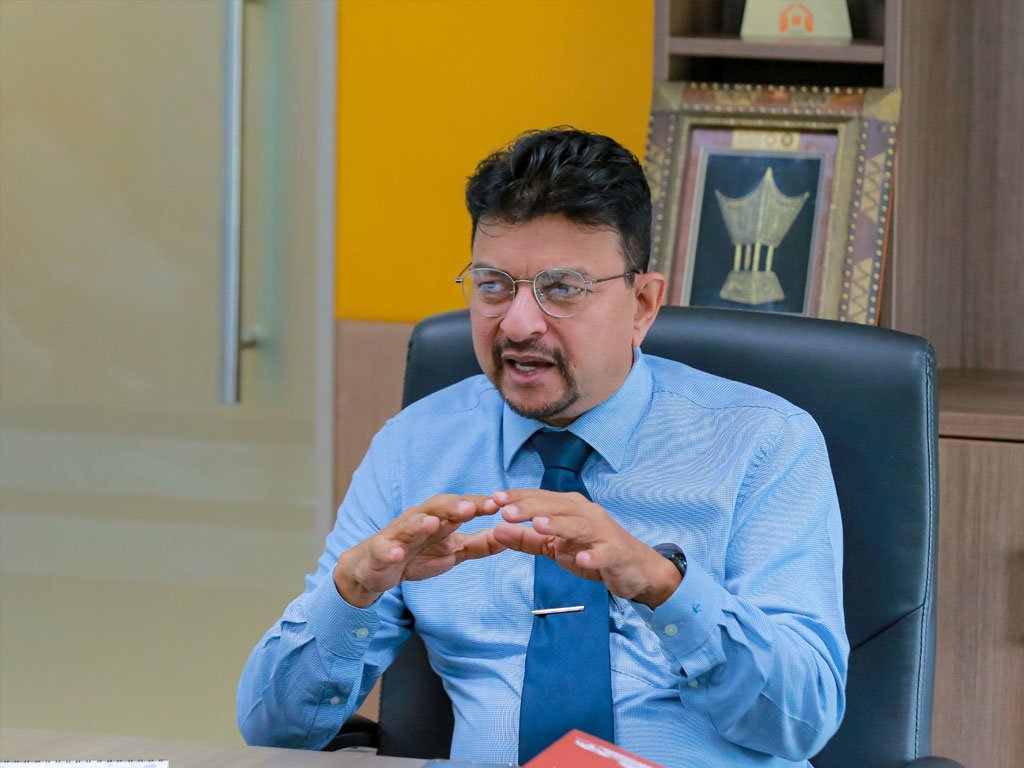
Colombo, January 25, 2026 – Sri Lanka’s Deputy Minister of Labour, Mahinda Jayasinghe, has clarified that the controversial education reform modules recently publicised were not originally created by the National People’s Power (NPP) government, but were adapted to reflect its policy direction. The remarks were made at a seminar hosted by the National Movement for Education Reforms in Kadawatha yesterday.
Speaking to educators, policymakers and activists, Jayasinghe rejected criticism that the current government hastily introduced an entirely new curriculum within a single year. “It is not possible for the government to finish writing modules within a year,” he said, noting that module development began under the previous administration.
The Deputy Minister acknowledged that the earlier draft work dated back to the Ranil-Maithri government’s plans in 2018 and 2019, but maintained that the NPP government had revised and aligned the content with its own education policies rather than starting from scratch. He said the aim was to implement reform ideas outlined in the NPP’s 2019 and 2024 election manifestos.
Jayasinghe also addressed the debate over curriculum content, arguing that there were no entirely different, standalone curriculums under earlier governments; instead, the approach to curriculum development has been progressively reformed over time and influenced by global education standards.
The comments come amid ongoing national discussions and controversies surrounding Sri Lanka’s education reform agenda. Earlier this month, the government postponed the Grade 6 segment of the reforms after public pressure and debate over implementation issues — a move that illustrated both public concern and political friction over the reform process.
Education experts and stakeholders have stressed the need for transparent communication and broad consultation to build trust in reform efforts. A group of academics recently called on the government to safeguard the integrity of the education reforms and ensure debates remain focused on improving learning outcomes rather than political controversy.
The government has also indicated plans to establish mechanisms involving university academics and education experts to address reform challenges and broaden participation, signaling ongoing adjustments to the reform process.