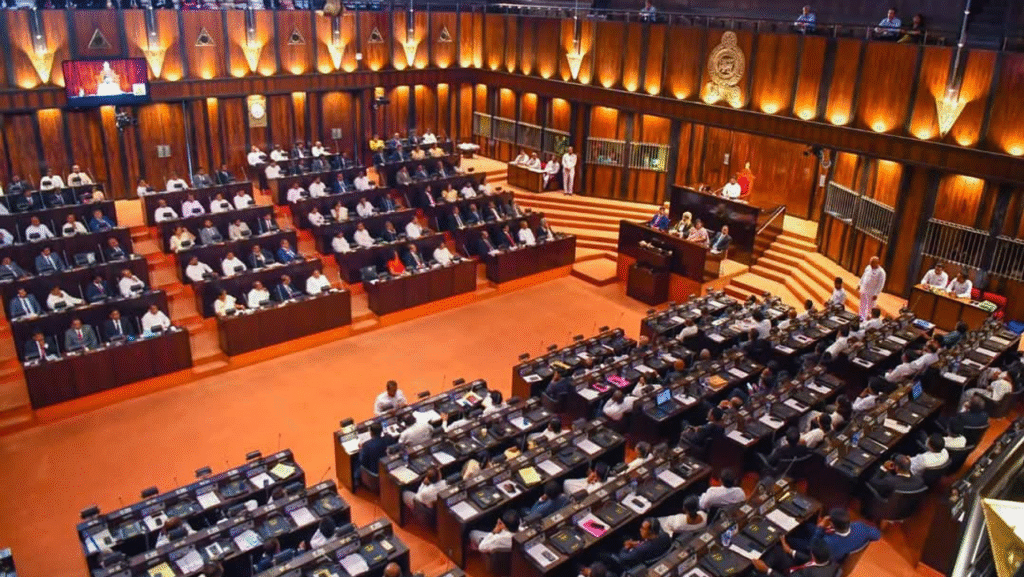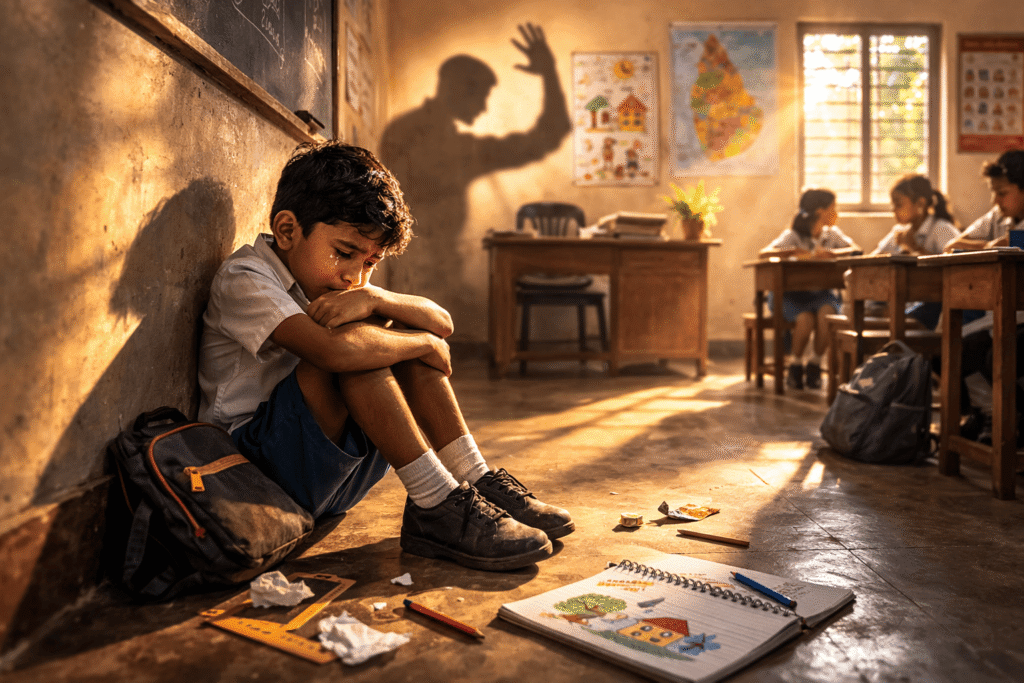
In Sri Lanka, recent amendments to the Penal Code have officially prohibited corporal punishment in schools. These amendments have sparked widespread debate among different sectors of society. While professional unions, some principals, and teachers have expressed concerns about maintaining discipline, religious leaders such as the Venerable Trinikaikaya Mahānāyaka Thero have voiced opposition.
Legal Perspective: Adults vs. Children
Under the Penal Code, physically assaulting an adult is considered a crime. For example, if a schoolteacher threatens a student with a slap or physically harms them, the teacher has no legal right to do so. Similarly, hitting a child is also a punishable offense.
The purpose of the new amendments is to reaffirm that criminal law applies to children as well. If an adult cannot be legally assaulted, then a child, as a citizen and human being, is equally protected.
Psychological and Social Impact
Research shows that corporal punishment has long-term harmful effects on a child’s mental health, including:
- Emotional trauma and stress
- Increased aggressive behavior
- Decline in self-esteem and social adjustment
- Negative impact on academic performance
Globally, the most disciplined students are found in countries like Japan, Hong Kong, and Taiwan, all Asian and predominantly Buddhist societies where corporal punishment is legally banned. In contrast, some Middle Eastern countries still allow corporal punishment, showing that physical punishment is not necessary to maintain discipline.
Alternative Methods to Maintain Discipline
There are many alternatives to corporal punishment that schools can adopt to maintain discipline:
- Establishing a disciplinary board and appointing a discipline officer – ensuring students understand school rules clearly.
- Non-physical disciplinary measures – such as temporary suspension from class, restriction from extracurricular activities, or temporary removal from sports or school events.
- Counseling and psychological support – training teachers to provide guidance and support for students exhibiting behavioral problems.
- Strengthening parent-school communication – notifying parents about their child’s behavior and involving them in corrective measures through meetings, communication books, or digital messaging.
Historical Context and Culture
Historically, corporal punishment became common during the Kandyan period when harsh punishments were a part of the royal judicial system. Methods such as hand and foot beating, ear-cutting, and public punishments were widely practiced. However, these actions contradict Buddhist principles, which emphasize guiding children with compassion rather than fear.
Even during the Kandyan era, there was no evidence that corporal punishment created disciplined or morally upright citizens. True discipline comes from respect, guidance, and structured education, not fear and physical harm.
Addressing Concerns About Discipline
Some argue that discipline cannot be maintained without corporal punishment. However, circulars issued by the Ministry of Education in 2005 and 2016 provide clear alternatives:
- Establishing a discipline committee and appointing a discipline officer
- Informing students of school rules and ensuring compliance
- Implementing non-physical disciplinary measures proportional to the misbehavior
- Providing trained school counselors for guidance and emotional support
- Maintaining strong communication between parents and teachers
The teacher-student relationship improves when teachers exercise patience, understanding, and teaching ability rather than resorting to physical punishment.
Conclusion
Banning corporal punishment in schools is a legally, psychologically, and culturally sound measure.
- It promotes student safety, mental health, and social discipline.
- Alternative disciplinary measures, parental involvement, and trained guidance counselors ensure orderly and respectful school environments.
- History and global examples demonstrate that true discipline does not require fear or violence, and societies that adopt non-violent methods foster more peaceful and responsible citizens.
In summary, physical punishment for children is unnecessary, harmful, and outdated, and the new Penal Code amendments reaffirm the protection and rights of children as citizens of Sri Lanka.