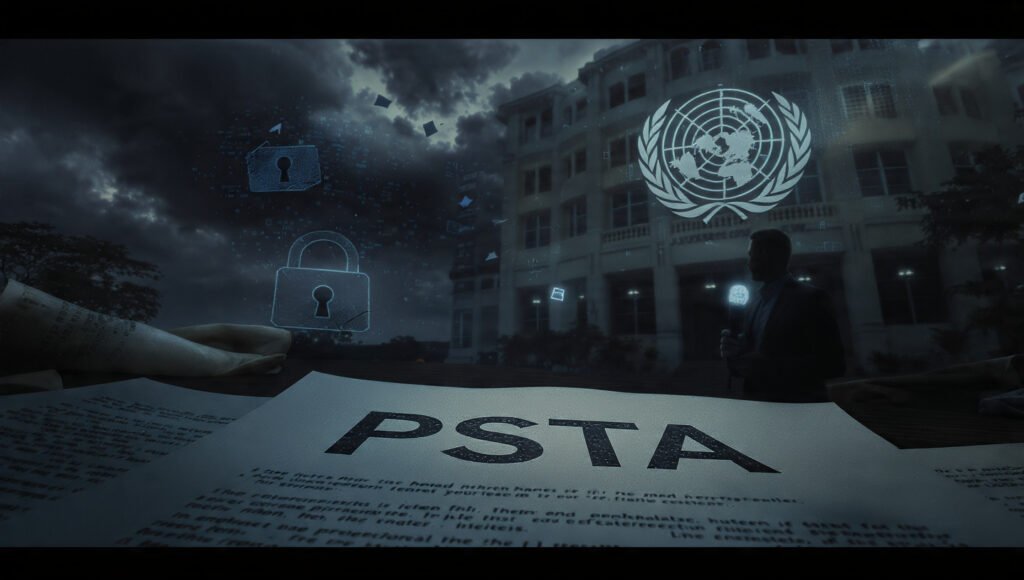
A group of Special Rapporteurs from the United Nations has issued a strong warning to the Government of Sri Lanka regarding the proposed Protection of the State from Terrorism Bill (PSTA).
In a letter dated February 9, 2026, the experts acknowledged the government’s initiative to review the existing Prevention of Terrorism Act (PTA). However, they stressed that the new draft bill still fails to comply with international human rights law and global counterterrorism standards.
Vague Definition of Terrorism and Risk of Abuse
The UN experts raised serious concerns over the overly broad and vague definition of “terrorism” in the proposed bill. Under international standards, terrorism should be limited to acts involving death, serious bodily injury, or hostage-taking.
However, the draft PSTA reportedly expands the definition to include acts such as causing minor injury, property damage, or even theft. The Special Rapporteurs warned that such ambiguity creates a significant risk of misuse, particularly against civil society activists, human rights defenders, and political dissenters.
Threats to Freedom of Expression and Media
Sections 8(2) and 78 of the draft bill criminalize the collection and dissemination of “confidential information.” According to the UN experts, this poses a grave threat to press freedom.
Reporting on military operations, police misconduct, or human rights violations could potentially be interpreted as terrorist activity under the proposed law. This, they cautioned, would create a chilling effect on journalists, researchers, and whistleblowers, undermining democratic accountability.
Digital Privacy and End-to-End Encryption (E2EE)
The UN representatives also criticized Section 55(1)(a) of the draft bill, which could compel service providers to decrypt user data.
They noted that End-to-End Encryption (E2EE) plays a crucial role in safeguarding privacy and freedom of expression in the digital age. Forcing companies to decrypt communications—even in cases where they do not possess encryption keys—would effectively weaken encryption standards.
The experts reiterated the position of the Office of the United Nations High Commissioner for Human Rights that governments should refrain from mandating “backdoors” or otherwise weakening encryption technologies, as such measures undermine international human rights protections.
Expanded Military Powers and Prolonged Detention
Another major concern is the expansion of police powers to the armed forces and the coast guard, which the experts say risks institutionalizing a permanent state of militarized emergency.
They warned that such provisions could increase the risk of torture, enforced disappearances, and arbitrary detention—issues that have historically drawn international scrutiny.
Protecting the State or the People?
The UN experts also questioned the very framing of the bill. By emphasizing “Protection of the State,” the draft appears to prioritize safeguarding the government rather than protecting citizens and their rights.
They urged authorities to refocus the legislation on protecting people and ensuring that national security measures remain consistent with democratic principles and the rule of law.
Additional Key Concerns
The UN communication highlighted several other problematic aspects of the draft bill:
- Broad presidential powers to ban organizations.
- The possibility of treating strikes and protests as terrorist acts.
- A wide-ranging immunity clause protecting officials acting under the law from accountability.
Call for Revision and Inclusive Consultation
The UN Special Rapporteurs emphasized that any counterterrorism legislation must comply with international human rights law, refugee law, and humanitarian law.
They called on the Sri Lankan government to engage transparently with civil society, human rights defenders, and independent experts to revise the draft legislation in line with international obligations.
The warning underscores growing international concern that, despite replacing the PTA, the proposed PSTA may replicate many of the same structural flaws—potentially deepening rather than resolving longstanding human rights issues.