Islamabad/Kabul – Pakistan and Afghanistan have entered their most intense military confrontation in years, with cross-border clashes escalating into what Pakistani officials described as “open war” against the Taliban-led government in Kabul.
According to Pakistan’s military spokesperson, Lt. Gen. Ahmed Sharif Chaudhry, Islamabad launched airstrikes on more than 20 locations across Afghanistan. The strikes targeted areas in Kabul, the southern city of Kandahar — residence of Taliban supreme leader Sheikh Haibatullah Akhundzada — and four border provinces.
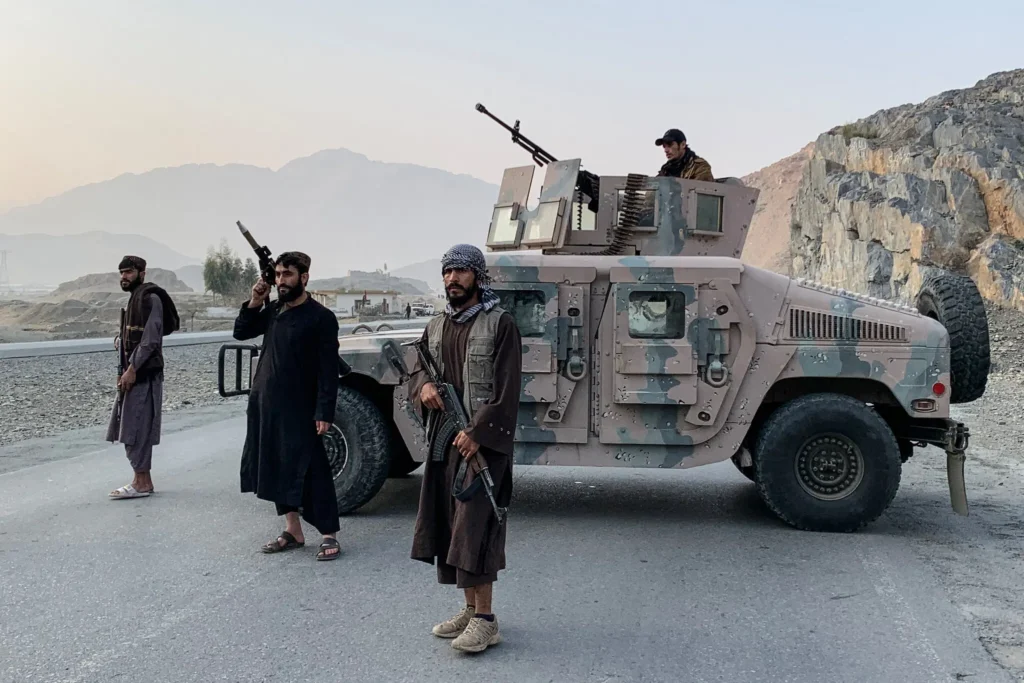
The air operations came hours after Afghan troops reportedly stormed over 50 Pakistani border posts. Taliban officials described their ground assault as a retaliatory response to earlier Pakistani strikes earlier in the week.
Pakistan’s Defence Minister Khawaja Asif declared on social media that Islamabad’s “cup of patience has overflowed,” signalling a hardened stance amid months of deteriorating relations.
Escalation of a Long-Brewing Conflict
The latest fighting marks a dramatic escalation following months of border skirmishes. Relations between Pakistan and Afghanistan have sharply declined over Islamabad’s accusations that the Taliban government is sheltering the Tehreek-e-Taliban Pakistan (TTP), a militant group responsible for deadly attacks inside Pakistan.
Kabul denies officially hosting the TTP but privately acknowledges the group’s presence within Afghan territory. The dispute has deepened mistrust along the 1,600-mile mountainous border separating the two nations.
Military analysts note that the confrontation reflects each side’s established strengths: Pakistan relying on overwhelming air power, while Taliban forces deploy ground incursions — a tactic honed during their two-decade insurgency against the US-led coalition.
Strategic Cities Targeted
Satellite imagery and Afghan military sources confirmed that at least one ammunition depot in Kabul was struck. Pakistani state media also reported strikes on military infrastructure in Kandahar.
Casualty figures remain disputed. Pakistan claimed at least 274 fatalities during border clashes without clarifying the breakdown between civilians and combatants. Taliban officials, meanwhile, asserted that 55 Pakistani soldiers were killed.
Regional and Economic Impact
The clashes unfold amid broader regional tensions, particularly uncertainty surrounding potential US military actions in neighboring Iran. Both Islamabad and Kabul have already faced economic strain due to prolonged border closures and trade disruptions.
Since October, Pakistan has intermittently closed major border crossings and expelled large numbers of Afghan refugees, further worsening bilateral relations and damaging local economies dependent on cross-border trade.
Residents in border provinces such as Khyber Pakhtunkhwa report living under constant fear of artillery exchanges and mortar shelling. Local communities on both sides have reportedly begun supporting their respective security forces.
Diplomatic Efforts Falter
Despite mediation attempts by Qatar, Saudi Arabia, and Turkey, and a fragile ceasefire signed in October, diplomatic efforts have failed to halt recurring clashes.
The renewed fighting signals a significant shift in Pakistan’s posture toward the Taliban, reversing years of tacit support during the US-led war in Afghanistan. Following the Taliban’s return to power in 2021, Islamabad initially sought cooperative engagement, including economic integration discussions. That optimism has now given way to open hostility.
With both governments hardening their rhetoric and expanding military operations, analysts warn that the conflict risks destabilising not only the two neighboring nations but the wider South Asian region.