An Investigative Report
Serious allegations have emerged that several solar power companies have resumed previously suspended projects in the Hambantota District by offering indirect bribes, resulting in large-scale destruction of elephant habitats bordering the Hambantota Wild Elephant Management Reserve.
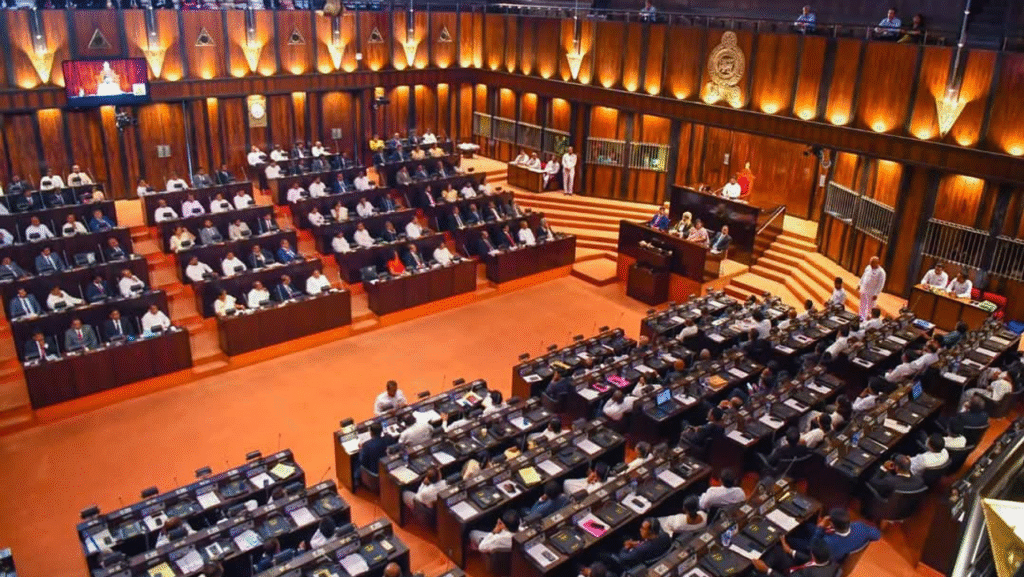
National People’s Power (NPP) Member of Parliament Nihal Galappaththi stated at the Hambantota District Development Committee meeting on January 29 last year that nearly 30 companies linked to questionable business interests had been granted approval by previous governments to construct solar power plants in the district. As Chairman of the Committee, he proposed suspending all such projects, and the committee resolved to halt them in 2025.
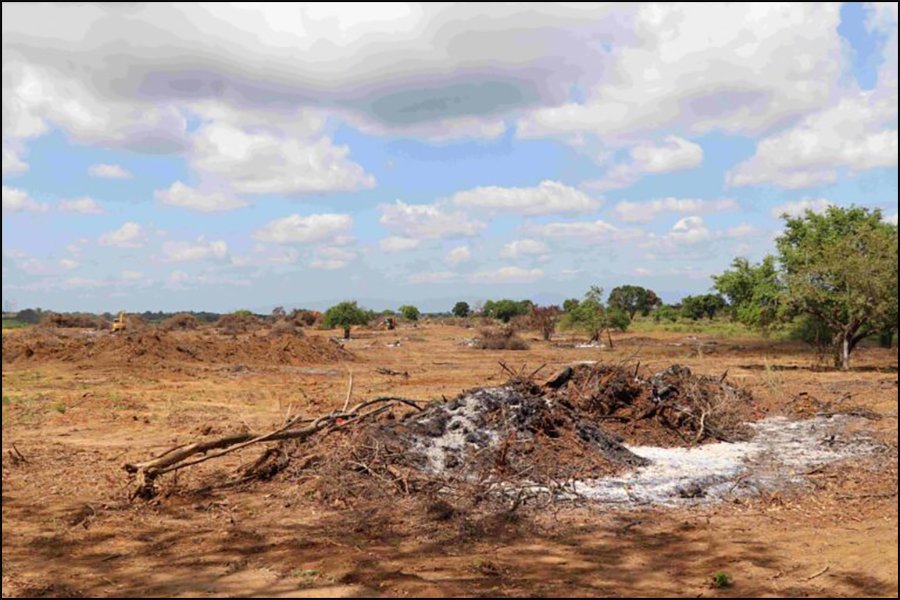
However, those suspended projects have now reportedly recommenced. Large areas of forest land—estimated at around 1,000 acres—adjacent to the Hambantota Wild Elephant Management Reserve in areas such as Sinukkugala, Orukengala, and Kapapuwawa are being cleared using bulldozers and, in some cases, set on fire. Electric fences are being erected across forest corridors, causing what environmentalists describe as massive ecological destruction in critical elephant habitats.
The companies allegedly involved in these activities include Dudu International Pvt Ltd, Nidhanya International Pvt Ltd, Tanu International Pvt Ltd, Tannish International Pvt Ltd, Orion Solar Pvt Ltd, Everrenew Energy Pvt Ltd, and Asian Solar Pvt Ltd.
Allegations of Indirect Bribery
It is alleged that five of these companies—Orion Solar, Nidhanya International, Tannish International, Tanu International, and Dudu International—collectively provided approximately Rs. 14 million to facilitate the revival of the halted projects.
According to the claims, around Rs. 11 million was channeled to construct a 12-kilometer electric fence from Nagarawawa to Mayurapura and Usgala under the supervision of Sunil Rathnayake, Hambantota District Secretary of the All Ceylon Farmers’ Federation, and Nalan Kumara, a Hambantota Urban Council member. The remaining Rs. 3 million is said to have been provided through other unspecified means.
The process allegedly took place under the guidance of MPs Nihal Galappaththi, Ruwan Senarath, and Athula Welandagoda, with coordination from Hambantota Pradeshiya Sabha Chairman Sumith Dayawansa. Senior Presidential Additional Secretary Russell Aponsu and Hambantota District Secretary Bimal Indrajith de Silva are also alleged to have been involved in coordination.
Critics argue that the financial contributions for the electric fence effectively functioned as an indirect bribe, enabling companies to restart projects without proper review by the District Development Committee.
Violations of Environmental Law
Under Sri Lanka’s National Environmental Act, Section 23B, development projects involving more than one hectare of forest land or power plants exceeding 50 megawatts require an Environmental Impact Assessment (EIA) and prior written approval.
To avoid triggering the EIA requirement, the companies have reportedly divided projects into smaller 10-megawatt units under separate subsidiaries while leasing land on a long-term basis from the Mahaweli Authority. Although each project individually falls below the 50 MW threshold, collectively they exceed it. Furthermore, the clearing of more than 50 acres of contiguous forest land should independently require full environmental assessment and public consultation.
Allegations have been raised that the Central Environmental Authority, the Mahaweli Authority of Sri Lanka, and the Sri Lanka Sustainable Energy Authority were aware of these projects but failed to enforce environmental safeguards.
Impact on Communities and Human Rights
The destruction of forests in elephant corridors has intensified human–elephant conflict in areas such as Mayurapura, Gonnoruwa, and Meegahajadura. Approximately 5,365 farming families reside in the Mayurapura division alone. Residents claim that elephant incursions have increased following habitat fragmentation, threatening agriculture, livelihoods, and safety.
Article 14 of the Constitution of Sri Lanka guarantees freedom to engage in lawful occupation and freedom of residence. Critics argue that by enabling forest destruction and escalating conflict, authorities have undermined these fundamental rights.
The projects are also alleged to violate the UN Guiding Principles on Business and Human Rights, adopted by the UN Human Rights Council in 2011, which require both states and businesses to prevent and remedy human rights abuses linked to commercial activities.
International Environmental Commitments
Sri Lanka is a party to several international agreements, including the Paris Agreement, adopted at United Nations climate negotiations in 2015, and the United Nations Convention to Combat Desertification, which entered into force in 1996.
Critics argue that large-scale deforestation in the dry zone of Hambantota could worsen water scarcity and desertification risks, contradicting Sri Lanka’s international climate and land management obligations.
The concept of a “Just Transition,” embedded within global climate policy frameworks, emphasizes fairness and protection of vulnerable communities during shifts to renewable energy. Observers contend that approving solar projects at the expense of forest ecosystems and farming communities contradicts this principle.
Public Trust Doctrine and Constitutional Obligations
The Public Trust Doctrine holds that natural resources are held by the state in trust for present and future generations. Sri Lankan jurisprudence, including the Eppawala phosphate case and other landmark rulings, has affirmed that the government is not the owner but the trustee of natural resources.
Article 27(14) of the Constitution mandates the state to “protect, preserve and improve the environment for the benefit of the community.” Environmental advocates argue that granting approvals that lead to forest destruction and ecological imbalance amounts to a breach of this constitutional responsibility.
Call for Action
Environmental groups and community representatives are calling for:
A full investigation into allegations of bribery and corruption.
Immediate suspension of all solar projects that have destroyed or threaten elephant habitats.
A comprehensive Environmental Impact Assessment with public consultation.
Reintegration of affected forest lands into the Hambantota Wild Elephant Management Reserve.
A review of gazette notifications issued under Section 12(1) of the Sri Lanka Sustainable Energy Authority Act to ensure environmentally appropriate site selection.
They argue that renewable energy development must not come at the cost of biodiversity, community livelihoods, and constitutional protections. Sustainable energy, they stress, cannot be considered truly sustainable if it destroys ecosystems, intensifies human–elephant conflict, and undermines environmental governance.
The government, elected on a promise to eliminate corruption and protect public resources, now faces mounting pressure to demonstrate transparency, accountability, and adherence to both national and international environmental commitments.