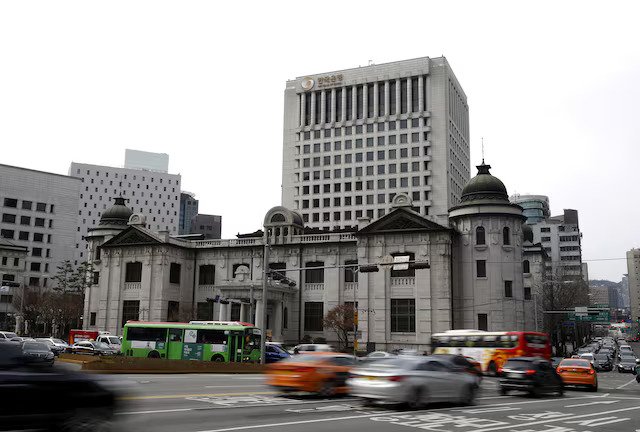
South Korea’s central bank is expected to keep its benchmark interest rate unchanged at 2.50% when it meets on January 15, as the recent weakening of the Korean won has reduced the scope for monetary easing, according to economists surveyed by Reuters.
The poll indicates that expectations for the next rate cut have been pushed back, with most economists now forecasting the first reduction in early 2027 rather than this year. The shift reflects growing concerns over currency stability and inflationary pressures.
The Korean won has fallen by nearly 2% in the first two weeks of January, raising the risk of higher import costs and renewed pressure on consumer prices. A weaker currency could complicate the Bank of Korea’s efforts to manage inflation, particularly as global financial conditions remain uncertain.
Inflation risks linked to exchange rate volatility were already highlighted by the Bank of Korea at its November policy meeting, where officials cautioned that a sharp depreciation of the won could undermine price stability. Against this backdrop, policymakers are expected to prioritise currency and inflation control over growth-supportive rate cuts in the near term.
Economists note that unless the won stabilises and inflation shows a clearer downward trend, the central bank is likely to maintain its cautious stance, delaying any policy easing well into the future.