By Staff Writer Dubai
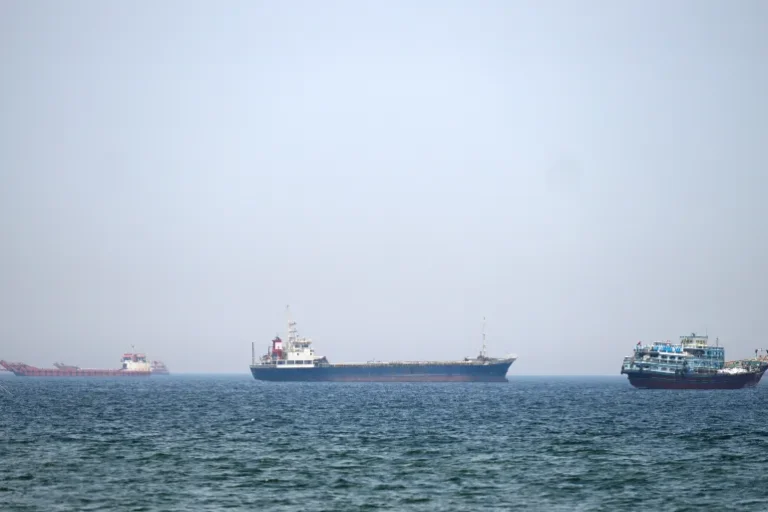
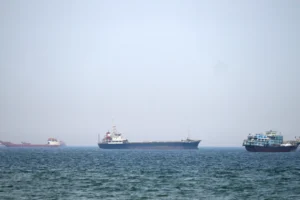
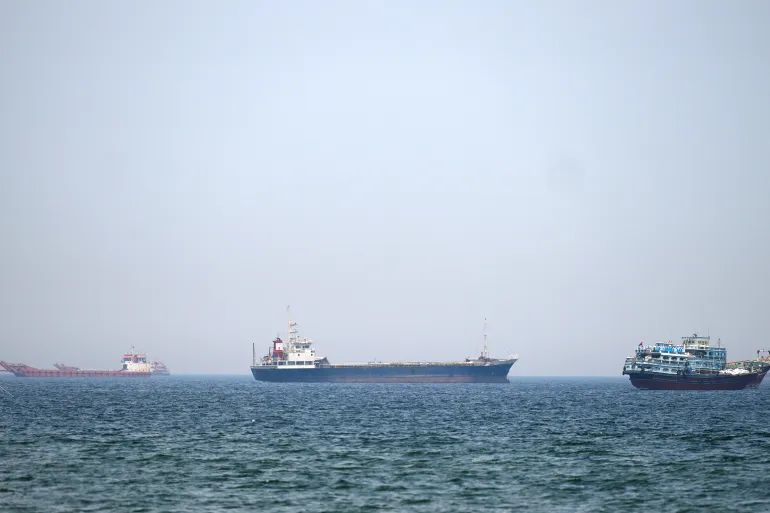
President Donald Trump has pledged that the United States will take decisive action to free dozens of commercial vessels currently trapped in the Strait of Hormuz, as a maritime standoff threatens to paralyze global energy markets.
Speaking from the White House, Mr. Trump stated that the US military and diplomatic corps would work to “unclog” the vital waterway, which has seen shipping traffic grind to a halt following a series of security incidents and retaliatory seizures.
The Strait, a narrow chokepoint between Oman and Iran, is the world’s most important oil artery, carrying roughly a fifth of the global oil supply. The current blockage has already caused a sharp spike in crude prices, with analysts warning of a “major inflationary shock” if the situation is not resolved within days.
‘Energy Independence’
Mr. Trump’s intervention signals a shift toward a more muscular maritime policy in the region. He characterized the blockage as an “assault on global commerce” and suggested that the US would not allow international waters to be “held hostage” by regional actors.
“We have the most powerful navy in the world, and we’re going to use our influence to make sure those ships get moving,” the President told reporters. “The world needs that oil, and those companies deserve to have their property protected. We’re going to get it done, and we’re going to do it fast.”
While the President did not specify whether he was authorizing direct military escorts or a “freedom of navigation” operation, the rhetoric has already led to heightened alert levels among naval forces stationed in the Persian Gulf.
A Chokepoint Under Pressure
The “logjam” began last week following a sequence of events that saw several tankers detained or forced to anchor due to what regional authorities cited as “safety violations” and “environmental concerns.” However, Western intelligence agencies have described the delays as a coordinated effort to exert political leverage.
The bottleneck has created a massive backlog of tankers, bulk carriers, and container ships, some of which are carrying perishable goods and critical energy supplies destined for Europe and Asia.
Diplomatic Fallout
The move has drawn a mixed response from the international community. While major oil-importing nations have welcomed the prospect of cleared shipping lanes, others have cautioned that US military involvement could further inflame tensions with Tehran.
Iran has long maintained that it is the primary guarantor of security in the Strait and has frequently warned that any “foreign interference” in the waterway would be viewed as a provocative act.
Market Reaction
Global markets reacted swiftly to the President’s comments. Brent crude, which had surged past $90 a barrel earlier in the week, saw a slight retreat as traders weighed the possibility of a swift resolution against the risk of a wider military escalation.
Shipping insurance premiums for vessels operating in the Gulf have reached record highs, with some operators choosing to divert ships around the Cape of Good Hope—a journey that adds weeks to delivery times and millions of dollars in additional costs.
As the US prepares to “free up” the trapped vessels, the world’s eyes remain fixed on the 21-mile-wide stretch of water that holds the key to global economic stability.