By Staff Writer Colombo, Sri Lanka
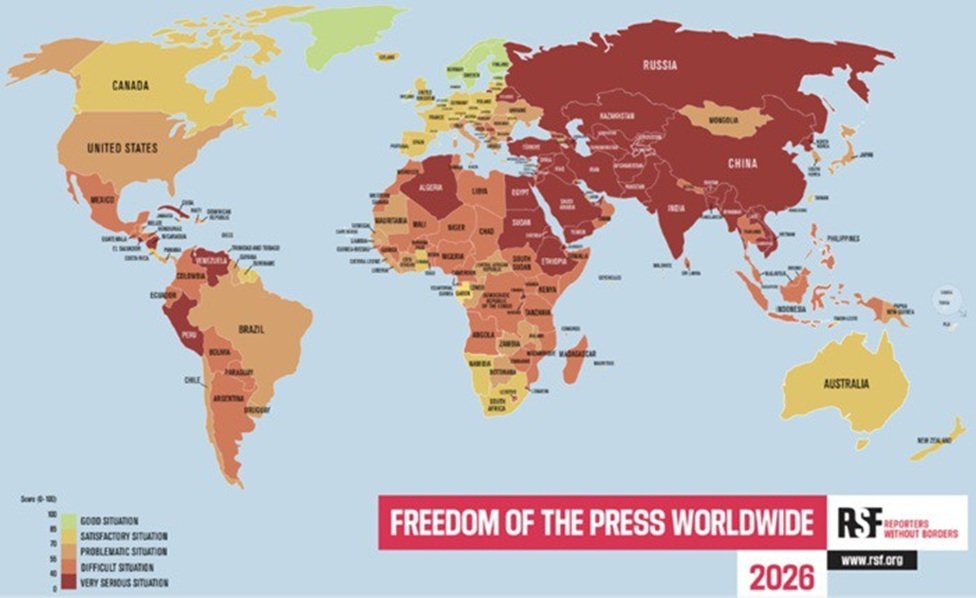
Sri Lanka has seen a decline in its standing on the World Press Freedom Index for 2026, as international monitors warn of a “stifling” environment for independent journalism in the island nation.
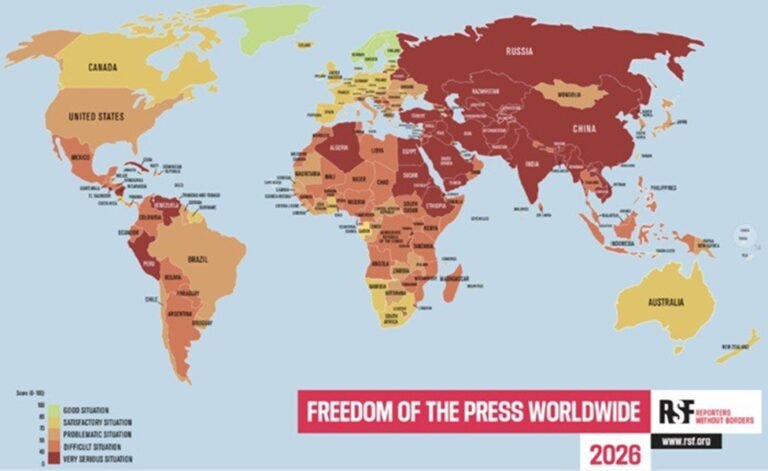
The annual report, compiled by the global watchdog Reporters Without Borders (RSF), ranks countries based on the level of freedom available to journalists. While several Scandinavian nations continue to lead the world, Sri Lanka’s position has dropped, placing it further down the global leaderboard.
The decline is attributed to a combination of restrictive new legislation, an uptick in the surveillance of digital platforms, and a failure to resolve long-standing cases of crimes against media workers.
‘Legislative hurdles’
A primary factor in this year’s lower ranking is the implementation of controversial laws aimed at regulating online speech. While the government maintains these measures are necessary to combat disinformation and hate speech, press freedom advocates argue they are being used to target dissenting voices.
“The broad definitions within these new laws create a climate of self-censorship,” an RSF representative noted in the report. “Journalists now face the constant threat of legal action for reporting on sensitive political or economic issues.”
The report also highlights the “systematic use” of state apparatus to monitor the social media activity of investigative reporters, which it claims has significantly hampered the ability of the press to act as a democratic watchdog.
Regional trends
Sri Lanka’s slip reflects a broader trend across South Asia, where several countries have struggled to maintain protections for media personnel. However, the island’s drop is particularly notable given its previous efforts to stabilize the media landscape following the 2022 political crisis.
The index categories for Sri Lanka showed particularly low scores in the “Legal Framework” and “Security” indicators, though “Economic Context” also played a role as high inflation and newsprint costs forced several independent outlets to scale back their operations.
Calls for Reform
In response to the report, local media collectives have renewed their calls for the repeal of restrictive clauses in the current laws and for greater transparency in government communications.
“This ranking is a wake-up call,” said a spokesperson for a Colombo-based journalists’ association. “A vibrant democracy cannot exist without a free and fearless press. If we continue on this path, the public’s right to information will be permanently compromised.”
The Sri Lankan government has yet to issue a formal response to the 2026 index, though officials have previously stated that they remain committed to media freedom while ensuring “national security and public order.”
As the international community looks on, the latest ranking serves as a stark reminder of the challenges facing those who seek to tell the truth in an increasingly complex political environment.