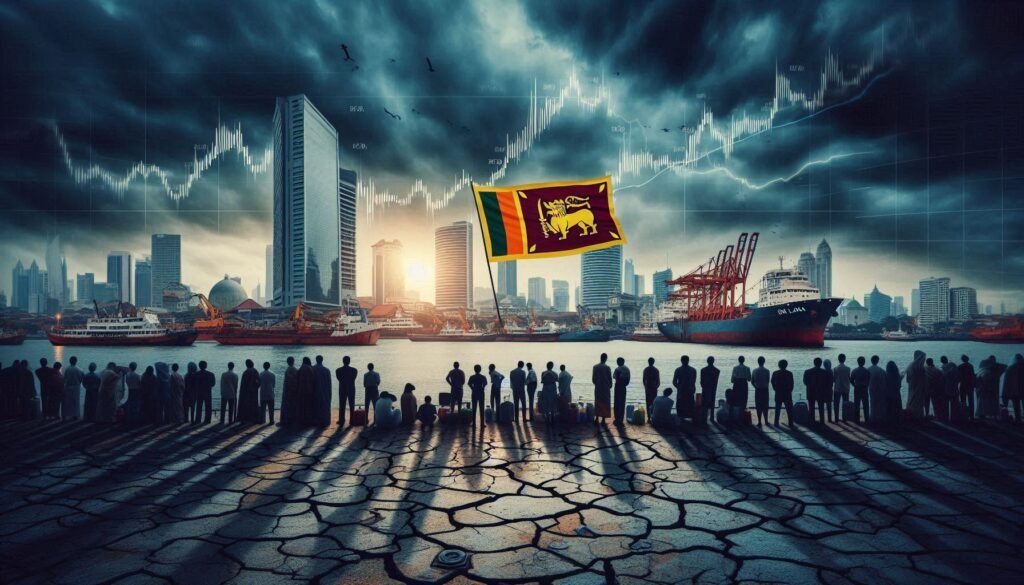
Sri Lanka’s prolonged economic crisis is not merely the result of global shocks or unforeseen circumstances. It is deeply rooted in domestic political failures, policy inconsistency, and a chronic lack of experienced governance. While external pressures such as global inflation and post-pandemic disruptions worsened conditions, the core problem remains the inability of successive governments—particularly the current administration—to manage the economy with competence and credibility.
A defining feature of the crisis has been the government’s lack of practical economic experience. Policy decisions have often been reactive rather than strategic, driven by political survival instead of long-term national interest. Abrupt tax changes, poorly planned fiscal reforms, and delayed negotiations with international lenders have created uncertainty across all sectors of the economy. For investors, uncertainty is poison. Capital avoids environments where policies shift without warning and where institutional stability is weak.
Foreign and local investors alike remain hesitant, not because Sri Lanka lacks potential, but because governance signals are troubling. The ruling political coalition is increasingly perceived as ideologically rigid, with tendencies that resemble state-centric or quasi-socialist economic thinking. Excessive state intervention, inconsistent regulatory frameworks, and mixed messaging on private sector participation have discouraged meaningful investment inflows.
Compounding this problem is the erosion of public trust. Citizens have borne the brunt of austerity measures, rising taxes, and reduced public services, while political accountability remains limited. Economic recovery cannot be sustained without public confidence, and confidence cannot exist without transparency, consistency, and leadership grounded in experience.
Sri Lanka’s geopolitical positioning and strategic importance should have been assets during the crisis. Instead, diplomatic ambiguity and policy indecision have weakened international confidence. While assistance from multilateral institutions is ongoing, recovery will remain fragile unless accompanied by deep structural reforms and a clear ideological commitment to open, rules-based economic management.
The path forward requires more than temporary relief or debt restructuring. It demands a political culture that values expertise over populism, pragmatism over ideology, and national interest over partisan gain. Without this shift, Sri Lanka risks remaining trapped in a cycle of crisis and recovery, never fully escaping economic vulnerability.