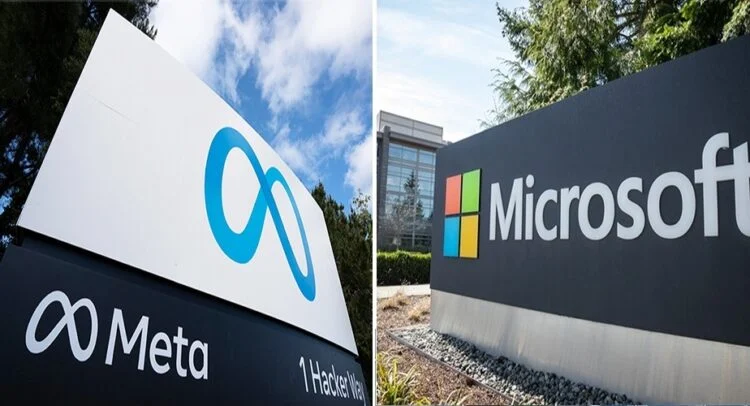
The global race for artificial intelligence dominance has intensified as Meta and Microsoft announced plans to significantly increase their spending on the technology, despite growing investor scrutiny over long-term profitability.
In separate quarterly briefings, both companies revealed that the cost of building and maintaining the massive data centres required for AI would continue to rise. Meta, the parent company of Facebook and Instagram, and Microsoft, a key partner of OpenAI, are betting billions that AI will define the next era of computing.
Meta’s ‘pivot’ to AI infrastructure
Mark Zuckerberg, Meta’s chief executive, told analysts that the company would raise its capital expenditure to between $37bn and $40bn this year. The increased budget is primarily directed toward the hardware and infrastructure needed to train its latest large language model, Llama 3.
“We are seeing strong momentum across our AI services,” Mr Zuckerberg said. While the company’s core advertising business remains robust, he cautioned that it would take “several years” before the massive investments in AI yield significant direct revenue.
The news initially led to a dip in Meta’s share price, as investors reacted to the prospect of higher costs without immediate returns—a pattern reminiscent of the company’s previous multi-billion dollar bet on the “Metaverse.”
Microsoft’s cloud surge
Microsoft also reported a surge in costs, driven by the rapid expansion of its Azure cloud platform. The company’s capital spending jumped to $14bn in the last quarter alone, a figure expected to grow as it integrates AI “copilots” across its suite of software.
Unlike Meta, Microsoft has already begun to see a financial boost from AI. The company reported that AI services contributed seven percentage points to Azure’s growth, as businesses flock to use its tools for automation and data analysis.
Satya Nadella, Microsoft’s chief executive, described the shift as a “generational transition,” arguing that the cost of building AI infrastructure is necessary to meet the “unprecedented” demand from corporate clients.
Investor anxiety
While the tech industry remains optimistic, Wall Street has expressed caution. Analysts are increasingly questioning when the “AI bubble” will translate into consistent, high-margin profits for the broader economy.
The scale of spending—now reaching hundreds of billions of dollars across the sector—has drawn comparisons to the fibre-optic boom of the late 1990s. While that infrastructure eventually laid the groundwork for the modern internet, it was preceded by a period of significant market volatility.
For now, the message from Silicon Valley is clear: the cost of staying in the AI race is high, but the cost of falling behind could be even higher.