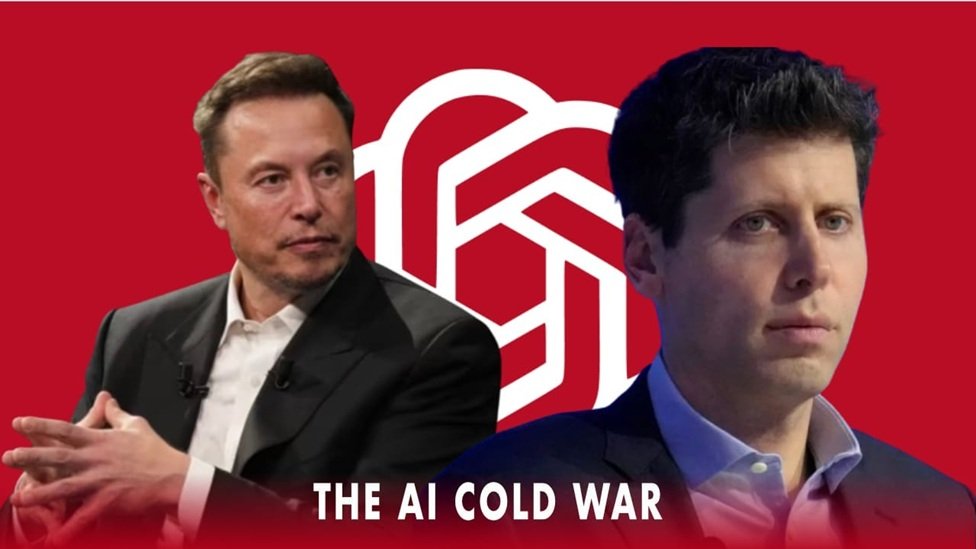
Elon Musk has escalated his legal feud with OpenAI, the company he co-founded, accusing the tech firm of abandoning its original non-profit mission in favour of a “profit-driven” partnership with Microsoft.
In a lawsuit that has sent ripples through Silicon Valley, the billionaire entrepreneur claims that OpenAI has become a “closed-source de facto subsidiary” of the world’s largest software company. Mr Musk alleges that this shift violates the founding agreement to develop artificial intelligence for the “benefit of humanity” rather than private gain.
OpenAI has hit back at the claims, describing the lawsuit as “frivolous” and suggesting it stems from Mr Musk’s regret at no longer being involved with the company’s success.
The ‘Non-Profit’ Dispute
At the heart of the conflict is the fundamental structure of OpenAI. Founded in 2015 as an open-source non-profit, the organization aimed to act as a counterweight to commercial giants like Google.
However, since the launch of ChatGPT, the company has transitioned into a “capped-profit” model, securing billions of dollars in investment from Microsoft. Mr Musk argues that the latest AI models—specifically GPT-4—are now proprietary secrets designed to maximize Microsoft’s profits, a move he claims is a “stark betrayal” of the company’s charter.
Technical Secrecy
The legal filing also targets the lack of transparency regarding how OpenAI’s most advanced systems work. While early versions of the technology were shared openly with the research community, more recent developments have been kept behind closed doors.
“OpenAI has been transformed into a closed-source entity focused on maximizing profits for Microsoft,” the lawsuit states. Mr Musk is seeking a court order to compel the company to make its research and technology available to the public and to prevent it from using its assets for the financial gain of its executives or partners.
A Battle of Titans
The rift highlights a growing tension within the tech industry over the safety and ethics of artificial intelligence. While Mr Musk has frequently warned that unregulated AI poses an “existential threat” to civilization, OpenAI’s leadership, including chief executive Sam Altman, maintains that significant funding is required to ensure the technology is developed safely and effectively.
In a public response, OpenAI released a series of past emails suggesting that Mr Musk had previously supported the idea of a for-profit pivot and had even suggested merging OpenAI with his electric car company, Tesla, to compete with Google.
Industry Implications
Legal experts say the case could set a significant precedent for how “altruistic” tech startups are governed when they reach massive commercial value.
As the trial looms, the dispute serves as a high-stakes reminder of the competition for dominance in a field that many believe will spark the next industrial revolution. For Mr Musk, it is a fight for transparency; for OpenAI, it is a fight for the right to evolve in a competitive global market.